
Your horse resists contact with the bit and hollows his back when you ask for collection. The training sessions end with both of you frustrated and no real progress toward your goals. Full Cry Farm Dressage handles horse training from basic levels through Grand Prix in Stonelick.
Why You Can Trust Us
Horses that need dressage training usually show tension through their bodies when you ask for collection. They might hollow their backs, come behind the bit, or rush through transitions. You'll see resistance in their necks and jaws when you pick up contact. Many horses at Training Level and above get stuck because the foundation work was never properly established.
Your riding progress stops when your horse fights basic aids. You can't work on lateral movements when he won't go forward into contact. Competition scores stay low because the judge sees tension instead of harmony. Other riders at your barn are moving up the levels while you repeat the same patterns.
Full Cry Farm Dressage starts every horse with ground work to establish respect and relaxation. Full Cry Farm Dressage rides each horse to assess his current training and identify gaps in his education. The work progresses systematically through rhythm, relaxation, contact, impulsion, straightness and collection. Full Cry Farm Dressage includes rider instruction during training sessions so you can maintain the progress at home.
Your horse will seek contact with the bit instead of avoiding it. He'll move forward with energy while staying relaxed through his back and neck. You'll have the tools to continue his training between lessons and see steady progress toward your competition goals.
Our process
- 1Evaluate horse and rider combinationFull Cry Farm Dressage watches you ride to see where the communication breaks down.
- 2Establish correct basicsFull Cry Farm Dressage works the horse from the ground and under saddle to build rhythm, relaxation and forward movement.
- 3Develop proper contactFull Cry Farm Dressage teaches the horse to seek the bit and carry himself through his back.
- 4Progress through training levelsFull Cry Farm Dressage adds lateral work, collection and extension as the foundation strengthens.
Why Choose Us
- USDF Gold, Silver and Bronze medalist with 50 years professional experience
- Training available from basic levels through FEI Grand Prix
- Classical dressage methods focused on proper horse development
- Individualized programs based on each horse's needs
Your horse fights you instead of working with you. He gets tense when you pick up the reins and won't move forward into the contact. You're stuck at the same level because the basics aren't solid.
Common questions
My horse won't accept contact
Your horse fights the bit, tosses his head, or goes behind the vertical. You can't get steady contact without a battle. Every ride feels like a wrestling match.
Contact problems usually start with balance and rhythm issues, not the horse's mouth. A trainer needs to see your horse move and identify whether it's a training hole, physical issue, or rider problem. Don't try to force contact with stronger bits.
How much does professional dressage training cost
You want to send your horse for training. The monthly fees seem high. You're not sure what's included or if it's worth the money.
Training costs vary based on the trainer's level, how many rides per week, and what's included in board. Expect $800-2000 per month for quality training. Ask for a breakdown of rides, turnout, and care included in the price.
How to choose a good dressage trainer
You need a trainer but don't know what to look for. Everyone claims to be classical. You've been burned by trainers who didn't deliver results.
Look for trainers with recognized certifications, competition records, and students who've moved up the levels. Watch them teach and ride. Ask about their training philosophy and timeline for goals. Good trainers explain what they're doing and why.
My horse is behind the leg and won't go forward
Your horse feels dead to your leg. You have to kick constantly just to keep moving. Your horse breaks to trot in canter or stops at jumps.
Dullness to the leg usually comes from too much nagging or conflicting aids. The horse needs to learn that light leg pressure means go NOW, not maybe. This requires systematic retraining with clear consequences for ignoring the aid.
How long does it take to train a horse to First Level
Your horse is green or stuck at Training Level. You want to move up but don't know how long it should take. You're wondering if your current program is working.
A horse typically needs 6-12 months of consistent training to move from Training Level to solid First Level, depending on age and natural ability. Progress should be steady each month. If you're not seeing improvement after 3 months, the training approach may need adjusting.
My horse spooks and won't focus on work
Your horse looks at everything except you. He spooks at shadows, birds, or nothing at all. You can't get through a ride without drama.
Spookiness often means the horse isn't truly on your aids or trusting your leadership. Work on simple exercises that require attention like transitions and bending. A horse focused on his job has less energy to worry about scary things.
My horse is crooked and won't track straight
Your horse drifts to one side, can't stay on the rail, or feels like a motorcycle leaning into turns. One direction feels completely different from the other.
Crookedness is normal but needs systematic correction through exercises like shoulder-in and haunches-in. A trainer needs to see which end is the problem and create a specific exercise plan. Pulling on one rein makes it worse.
Full training vs partial training for my horse
You can't decide between full training and riding your horse yourself with occasional lessons. You want the best progress but need to watch costs.
Full training works faster for green horses or major retraining. Partial training (2-3 rides per week) works well for maintenance or specific problems. If you can only ride weekends, partial training keeps your horse sharp during the week.
Should I train my horse myself or hire a professional
You can ride but you're not sure you can train your horse properly. You want to save money but don't want to mess up your horse. You're worried about creating bad habits.
If you're asking this question, you probably need professional help. Training requires timing and feel that takes years to develop. A professional can fix problems in weeks that might take you months to create. Consider partial training where the pro rides 2-3 times per week.
When should I move my horse up a level
You're schooling some next-level movements but not sure if you're ready to show. You don't want to embarrass yourself or stress your horse.
You should consistently score 65% or higher at your current level before moving up. The new movements should feel easy at home. Your horse should understand the basics so well that new movements don't cause tension or confusion.
Is my horse too old to start dressage training
Your horse is 12, 15, or older. You want to do dressage but worry you've missed the window. Everyone talks about starting young horses.
Horses can learn dressage at any age if they're sound. Older horses often have better attention spans than young ones. The training may progress slower, but many horses compete successfully into their twenties. A vet check ensures they're physically ready.
Classical training vs modern dressage methods
You hear about different training methods and don't know which is right for your horse. Some trainers say classical, others focus on modern competition techniques.
Classical training focuses on long-term soundness and correct muscle development. Modern methods may get faster show results but can create tension. Look for trainers who develop horses systematically rather than drilling movements for quick fixes.
Boarding at home vs professional training facility
You're keeping your horse at home but wondering if a professional facility would be better. You're not sure if the extra cost is worth giving up the convenience of having your horse in your backyard.
Home boarding works if you have proper facilities and time for daily care. A training facility gives you access to better arenas, professional oversight, and other serious riders. Consider your goals and how much time you actually spend riding versus doing chores.
Our team
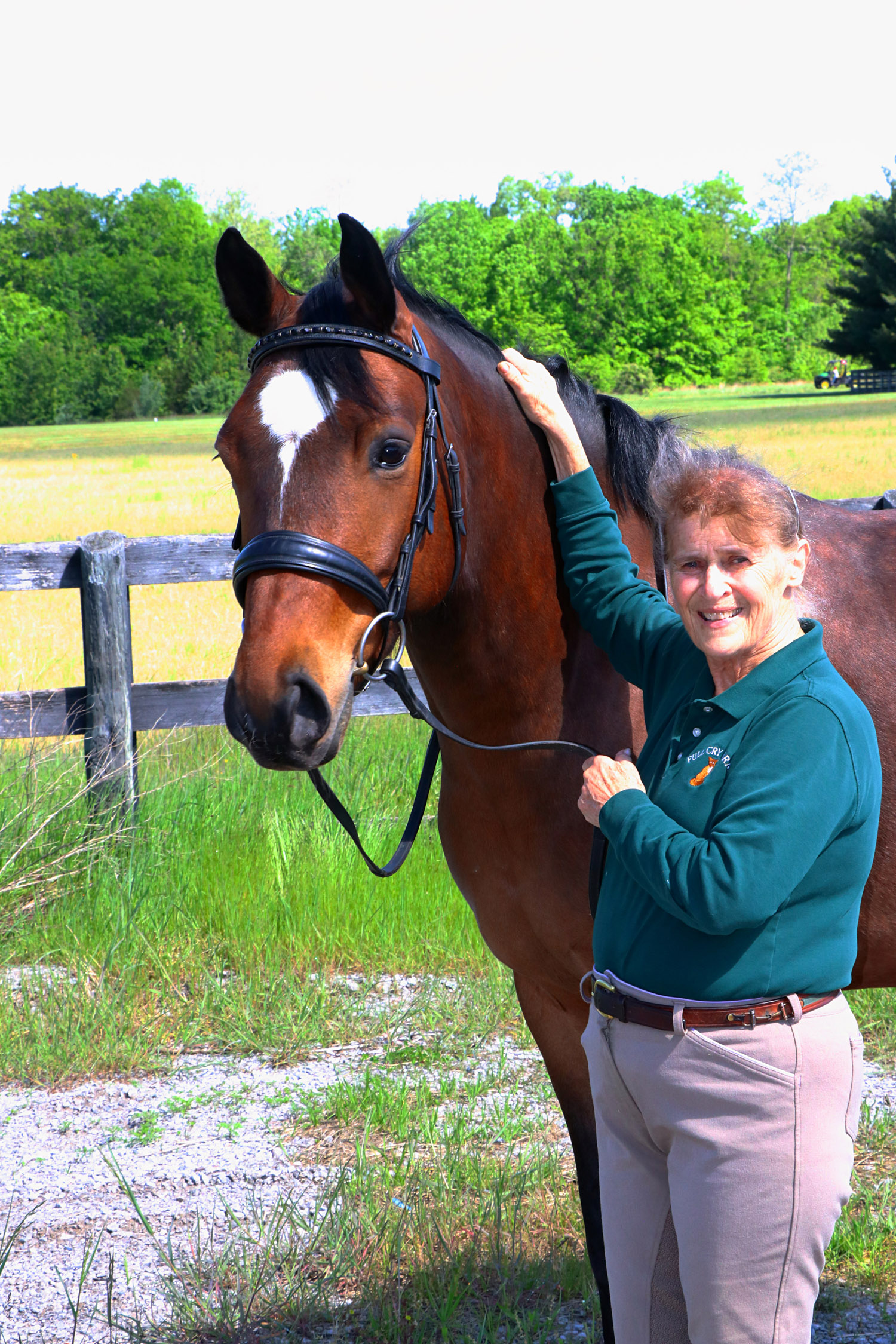
USDF Gold, Silver and Bronze medalist with over 50 years professional teaching experience. She has trained and successfully competed 5 horses to the Grand Prix level and enjoys working with all levels of riders, particularly those new to dressage.
Frequently asked questions
What levels of horses do you train?
We provide dressage training from basic levels through Grand Prix. Our individualized training programs work with each horse to establish proper fundamentals, then progress systematically through the classical training scale regardless of where he starts.
Do you include rider instruction during training?
Yes. We include rider instruction during training sessions so you can maintain the progress at home and continue your horse's development between lessons.
What's included in your horse training program?
We start with ground work to establish respect and relaxation, assess your horse's current training to identify gaps, then progress systematically through rhythm, relaxation, contact, impulsion, straightness, and collection. You'll receive instruction so you have the tools to support your horse's continued progress.